When people think about SEO, they often focus on optimizing pages, writing content, and adding keywords. These activities are important, but they are only one part of search engine optimization. Another major area is off-page SEO, which focuses on activities and signals that happen outside your own website.
Off-page optimization can help a website build credibility, earn references from other websites, increase brand visibility, and attract referral traffic. It is closely connected with link building, digital PR, online reputation, and relationship building.
But what is off-page SEO, and how does it differ from on-page and technical SEO? Let’s explore the key concepts and strategies.
What Is Off-Page SEO?
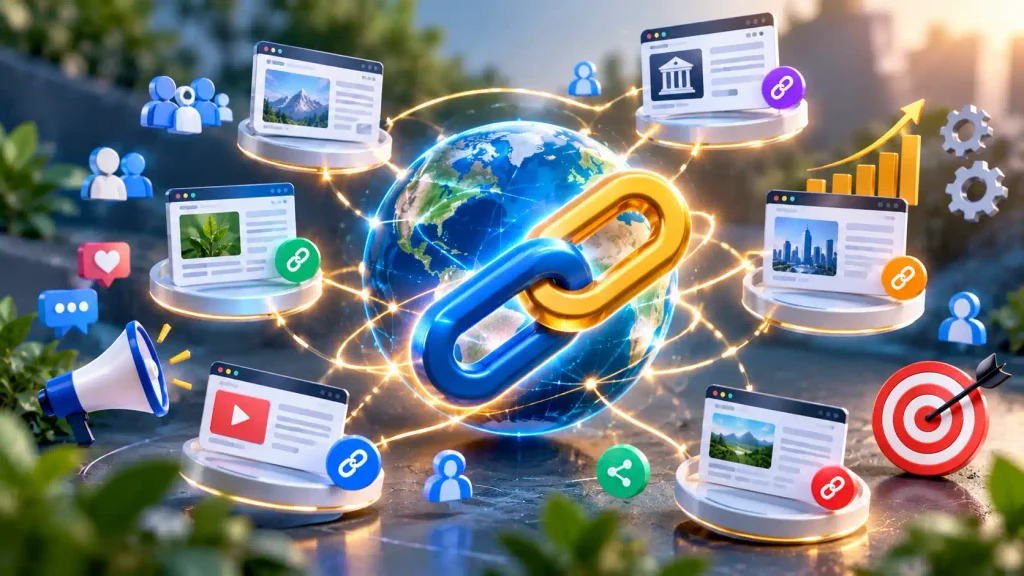
Off-page SEO refers to activities performed outside your website that can contribute to its search visibility, reputation, and perceived authority.
Unlike on-page SEO, which focuses on elements you can directly edit on your webpages, off-page SEO involves external signals and activities.
Some common off-page SEO activities include:
- Earning backlinks
- Link building
- Guest posting
- Digital PR
- Brand mentions
- Blogger outreach
- Content promotion
- Relationship building
- Online reputation management
The main idea is to establish your website as a useful and credible resource within its industry.
Why Is Off-Page SEO Important?
Search engines need to evaluate more than just the content published on your website. External references can provide additional context about a website and its content.
For example, if several relevant websites reference a useful resource on your site, those references can help search engines discover the page and understand its connection to a particular topic.
Off-page SEO can also provide benefits that have nothing to do directly with rankings.
A successful campaign may help you:
- Generate referral traffic
- Increase brand awareness
- Reach new audiences
- Build industry relationships
- Earn editorial mentions
- Strengthen your website’s backlink profile
- Support long-term organic visibility
However, off-page SEO does not guarantee higher rankings. Search engines use many signals and systems to evaluate webpages.
How Does Off-Page SEO Work?
Off-page SEO generally involves building your website’s presence beyond its own pages.
Imagine you publish a detailed guide about technical SEO. Another marketing publication discovers the guide and references it in an article. Readers can follow the link to your website, while search engine crawlers can also discover the destination page through that connection.
If this happens naturally across relevant websites, your site can develop a broader network of external references.
This is why successful off-page SEO is often less about sending thousands of links toward a website and more about creating something worth mentioning.
What Is Link Building?
Link building is one of the best-known parts of off-page SEO.
It involves earning or acquiring hyperlinks from external websites that point to your webpages.
There are many link-building approaches, including:
Guest Posting
Guest posting involves writing useful content for another relevant website. Depending on the publication’s policies, an article may include an appropriate link to a relevant resource.
The content should be valuable to the host website’s audience rather than created simply to manipulate search rankings.
Link Insertion
A link insertion involves adding a relevant reference to an existing webpage.
For example, a publisher may update an article about keyword research and add a link to a comprehensive guide that provides additional information.
The relevance and context of the link are important.
Broken Link Building
Broken link building involves identifying outdated or broken references on other websites and suggesting a useful replacement resource.
This can help website owners maintain their content while creating a potential link opportunity.
Resource Link Building
Some websites publish resource pages containing links to useful guides, tools, studies, and educational material.
If your content genuinely fits the topic, you may be able to suggest it to the publisher.
What Is a Backlink?
A backlink is a link from another website to your website.
Backlinks are also known as inbound links or incoming links.
For example:
External Website → Your Website
The external website is referring visitors and potentially search engine crawlers to your page through the link.
However, backlinks should not be judged only by quantity. Relevance, context, source quality, and the way the link was obtained are important considerations.
A backlink from a relevant publication can have a very different context from a large number of unrelated or low-quality links.
What Is Digital PR?
Digital PR is another important off-page SEO strategy.
It involves promoting useful, interesting, or newsworthy information to journalists, publishers, bloggers, and online media.
Examples include:
- Original research
- Industry surveys
- Expert commentary
- Unique statistics
- Data studies
- Newsworthy announcements
- Expert interviews
When publishers reference this information, a campaign can generate brand exposure, referral traffic, and potentially editorial backlinks.
Do Brand Mentions Matter?
A brand mention occurs when another website or online publication talks about your business, product, service, or organization.
A mention does not always include a hyperlink.
Even when there is no link, brand visibility can contribute to awareness and help establish your presence within a particular industry.
From an SEO perspective, it is important not to assume that every unlinked mention directly passes ranking value. The main benefit may instead be exposure, recognition, and the possibility of future relationships or links.
Off-Page SEO vs. On-Page SEO
The difference is mainly where the work takes place.
On-page SEO focuses on elements within your own website, such as:
- Content
- Headings
- Page titles
- Keywords
- Internal links
- URLs
- Images
Off-page SEO focuses on external activities such as:
- Backlinks
- Guest posting
- Digital PR
- Brand mentions
- Outreach
- Content promotion
Both areas can work together. A strong backlink pointing to a poorly optimized page may not produce the desired result, while excellent content can benefit from external exposure and references.
Off-Page SEO vs. Technical SEO
Technical SEO focuses on the infrastructure and accessibility of your website.
This can include:
- Crawling
- Indexing
- Site architecture
- Page performance
- XML sitemaps
- Canonical URLs
- Structured data
- Mobile accessibility
Off-page SEO, on the other hand, deals primarily with external signals and activities.
A complete SEO strategy may therefore involve technical, on-page, and off-page optimization at the same time.
How to Build an Effective Off-Page SEO Strategy
A sustainable approach starts with creating something worth referencing.
Create Valuable Resources
Publish detailed guides, original research, useful tools, statistics, and other resources that solve real problems.
Target Relevant Websites
When building relationships or conducting outreach, focus on websites that are genuinely related to your subject or audience.
Prioritize Quality Over Quantity
A large number of irrelevant backlinks is not necessarily better than a smaller number of relevant references.
Build Genuine Relationships
Connect with editors, journalists, bloggers, industry experts, and other professionals. Genuine relationships can create opportunities beyond a single link.
Monitor Your Backlink Profile
Regularly review the websites linking to you. Look at referring domains, anchor text, relevance, and changes over time.
Common Off-Page SEO Mistakes
One of the most common mistakes is treating off-page SEO as nothing more than backlink acquisition.
Other mistakes include:
- Focusing entirely on backlink quantity
- Obtaining links from irrelevant websites
- Using manipulative link schemes
- Repeating the same anchor text excessively
- Ignoring the quality of referring websites
- Sending generic outreach messages
- Creating content solely for links
- Relying entirely on third-party SEO metrics
Metrics such as Domain Authority and Domain Rating can be useful for research, but they should not replace a complete assessment of relevance and website quality.
Frequently Asked Questions About Off-Page SEO
Is off-page SEO the same as link building?
No. Link building is one part of off-page SEO. Off-page optimization can also include digital PR, brand awareness, content promotion, relationship building, and other external activities.
Are backlinks the most important part of off-page SEO?
Backlinks are an important part of off-page SEO, but they are not the only consideration. External visibility, brand mentions, referral traffic, and relationships can also be valuable.
Can off-page SEO improve rankings?
Off-page activities can contribute to a website’s overall search visibility, but rankings depend on many factors. No particular off-page technique guarantees a specific position in search results.
How long does off-page SEO take?
Results vary depending on the website, industry, competition, content, and strategy. Some activities may generate referral traffic quickly, while building a strong reputation and backlink profile can take considerably longer.
Is guest posting part of off-page SEO?
Yes. Guest posting can be considered an off-page activity when you contribute useful content to another website and build external visibility or relevant relationships.
Final Thoughts
Off-page SEO focuses on activities and external signals that take place outside your own website. It includes link building, backlinks, guest posting, digital PR, brand mentions, outreach, and relationship building.
The goal should not be to collect as many links as possible. A stronger approach is to create useful content, earn relevant references, build genuine relationships, and establish your website as a credible resource within its industry.
When combined with strong on-page content and a technically sound website, off-page SEO can become an important part of a broader strategy for building long-term search visibility and online authority.