Every winter, a wave of people suddenly needs an accountant, and many of them start with a search. SEO for accountants is the work of making sure your firm is the one they find, and the one they keep as a client after the deadline passes. Accounting is different from most local marketing for three reasons: demand follows the tax calendar, the advice falls into the “Your Money or Your Life” category that Google handles carefully, and nearly every search has local intent. This guide covers the steps that matter most, with a calendar, a comparison table, worked examples, and the mistakes to avoid.
Key takeaways
- Your Google Business Profile is usually the biggest single lever, because “accountant near me” searches are decided by local results.
- One page per client niche or service ranks and converts better than a single catch-all “Services” page.
- Publish deadline-driven content weeks ahead of the date it covers, using official IRS dates.
- Ask for reviews honestly. Google prohibits incentives for reviews, and the FTC rule on fake reviews is in force.
- Financial content needs accuracy checks by a qualified professional before it is published.
Why Accounting SEO Has Its Own Rules
Demand is seasonal. Individual returns for a calendar year are due April 15 (or the next business day if that falls on a weekend or holiday). The IRS offers an automatic six-month extension to file if you submit Form 4868 by the original due date, but the extension applies to filing only and tax owed is still due on the original date. Estimated tax payments follow four payment periods through the year, and the IRS says individuals generally need to pay if they expect to owe $1,000 or more when they file. Each of these dates creates a stream of searches, from “what do I need to file” to “I owe estimated tax, what now.”
Trust is the bar. Google’s guidance on helpful content says trust is the most important part of E-E-A-T, and that topics which could significantly affect people’s financial stability get extra care. For a firm, that means showing who wrote and reviewed each page, keeping facts current, and avoiding promises you cannot keep.
Searches are local. Google says local results rely mainly on relevance, distance, and prominence, and that there is no way to pay for a better local ranking. You earn it with a complete profile, accurate information, reviews, and a useful website.
Step 1: Set Up Your Google Business Profile Properly
A verified profile is the base of local visibility. Follow Google’s Business Profile guidelines closely:
- Use your real-world business name as it appears on signage and your website. Do not add keywords or taglines.
- Choose the fewest categories that describe your core business, and make them as specific as possible. A tax-focused firm and a bookkeeping-focused firm may choose different primary categories.
- Keep address, phone number, hours, and website accurate. Service-area businesses that do not serve clients at their address should hide it.
- Write a description that explains your services, not a sales pitch. Google’s guidelines say to avoid promotions and links in the description.
- Add real photos and keep hours updated for tax season.
Our Google Business Profile guide walks through each field. Keep your name, address, and phone consistent everywhere, as covered in our post on NAP consistency.
Step 2: Build Niche Service Pages
A single page that lists “tax, bookkeeping, payroll” speaks to nobody in particular. Separate pages for each audience and service let you match what people search for:
- “Tax preparation for freelancers”
- “Bookkeeping for restaurants”
- “Payroll services for small construction companies”
Each page should explain who the service is for, the problems it solves, what the process looks like, what the client needs to provide, how pricing generally works, and how to book a consultation. Use real details from your practice. Pick niches you actually serve, since thin pages written only to catch searches are the type of content Google’s helpful content guidance warns against.
Start with keyword research to confirm that real people search for each niche. If you add structured data, Google’s LocalBusiness documentation lists name and address as required properties and recommends opening hours, telephone number, and URL. Use the most specific LocalBusiness subtype available on schema.org. Structured data helps Google understand the page, but it does not guarantee any special display.
Step 3: Publish on the Tax Calendar
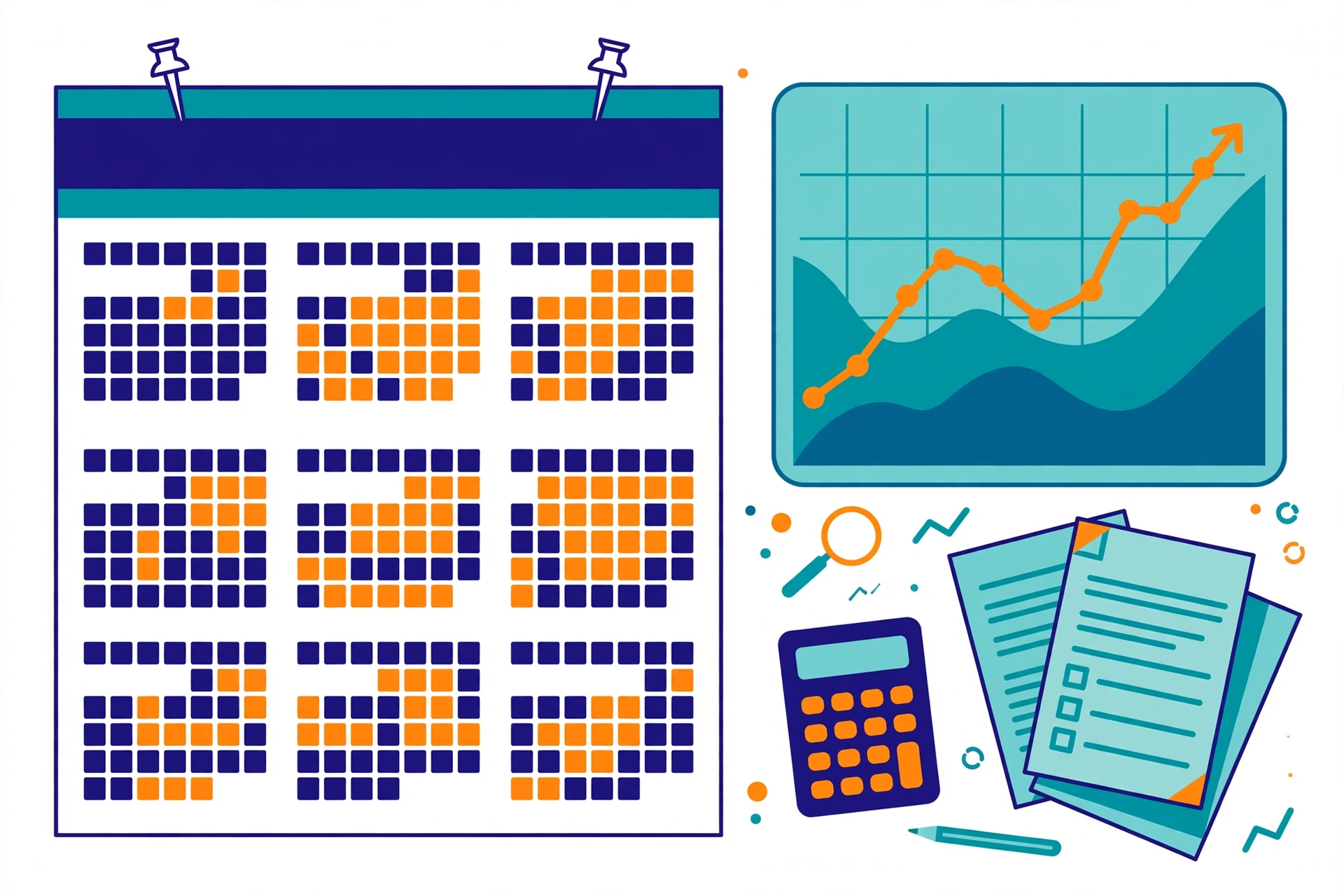
People search before a deadline, not on it. Publish helpful content several weeks ahead, and refresh it each year. The table below is a planning template, not a promise of results. Check each date against the current IRS calendar before publishing.
| Months | Searcher need | Content ideas | Profile activity |
|---|---|---|---|
| November to December | Year-end planning | Year-end checklist, entity choice for next year | Holiday hours, planning consultation offer |
| January to February | Gathering documents | What to bring to your accountant, how to read common tax forms | Extended hours, appointment availability |
| March to April | Filing and extensions | How an extension works, what stays due on the original date | Deadline reminders, recent services |
| May to August | Quieter months | Estimated tax explainers, bookkeeping cleanup, mid-year review | Team and service highlights |
| September to October | Extension filers | Final steps for extended returns, responding to IRS notices | Deadline reminders |
Example scenario: a hypothetical two-partner firm wants to rank for freelancers. In early November it publishes “Year-end tax checklist for freelancers,” which covers gathering income records, tracking deductible expenses, and reviewing estimated payments. In mid-January it updates the same URL with the new filing year. In June it adds a mid-year version. Over several cycles the firm owns a small library of reviewed, updated pages instead of dozens of one-time posts.
Step 4: Ask for Reviews Honestly
Reviews feed prominence, and prospective clients read them. Follow the rules:
- Google’s review help says you can share a link or QR code that makes it easy to leave a review, and that offering free or discounted services in exchange for reviews is prohibited.
- The FTC’s Consumer Reviews and Testimonials Rule, effective October 21, 2024, prohibits fake reviews, review incentives that depend on the review being positive or negative, and certain kinds of review suppression.
- Reply to reviews politely and briefly, without revealing any client details. Client confidentiality applies in public replies too.
Ask every client, not just the happy ones you hand-pick, and ask when the work is complete. Do not script what they should say. Check your state board of accountancy and professional standards for any rules on testimonials in advertising, and consult a qualified adviser if unsure. This post is not legal advice.

Step 5: Add an Accuracy Workflow
Because tax and accounting content can affect financial decisions, build a review step into publishing:
- A licensed professional at the firm reviews each substantive page before it goes live.
- Name the author and reviewer, with credentials, on the page. Google’s guidance asks you to make clear who created the content.
- Link to primary sources such as IRS pages when you state a rule, deadline, or threshold.
- Add a plain note that the content is general information and not advice for a specific situation.
- Re-check figures and dates each January and whenever the rules change.
- Avoid guarantees such as “we will cut your tax bill.” Outcomes depend on each client’s facts.
Step 6: Earn Links That Fit an Accounting Firm
You do not need clever stunts. Reasonable sources include your state CPA society or association listing, the local chamber of commerce, industry groups for the niches you serve, local news when reporters want an expert on a tax topic, and small business blogs where you contribute a useful guide. Avoid buying links, swapping links at scale, or using automated link tools, all of which Google lists as link spam in its spam policies.
Step 7: Make Pages Easy to Quote
More people now ask AI assistants for recommendations. Google states that there are no additional requirements or special optimizations needed to appear in AI Overviews or AI Mode. The standard fundamentals apply: pages must be indexable, crawlable, in text form, and genuinely helpful. In practice, write pages with a direct answer near the top, clear headings, verifiable facts about your firm, and consistent information everywhere you are listed. Those habits help people and search systems alike. Measure the result in Google Search Console, where AI feature traffic is included in the Web search type.
Mistakes That Cost Accounting Firms Visibility
- One generic services page. Split by audience and service.
- A stale Business Profile. Wrong hours during tax season send clients to competitors.
- Publishing after the demand peak. A “how to file” guide posted in April arrives late.
- Unreviewed financial content. One incorrect threshold undermines trust.
- Review shortcuts. Incentives and fake reviews break Google and FTC rules.
- No measurement. Track calls, form fills, and appointment bookings by source, not just traffic.
Frequently Asked Questions
How long does SEO for accountants take?
There is no fixed timeline. Profile improvements can show results sooner than new website pages, and competitive cities take longer. Judge progress in Search Console by impressions and clicks on your service pages over several months.
Do I need a blog?
You need helpful pages, not necessarily a blog. Guides tied to the tax calendar and the questions clients actually ask can work well, as long as they are accurate and kept current.
Sources
- Google Business Profile Help: Improve your local ranking
- Google Business Profile Help: Guidelines for representing your business
- Google Search Central: Creating helpful, reliable, people-first content
- Google Search Central: AI features and your website
- IRS: When to file
- FTC: Consumer Reviews and Testimonials Rule Q&A
If you would like a second opinion on your firm’s search presence, you can reach us through our contact page.