SEO vs PPC: Which Should Your Business Invest In First?
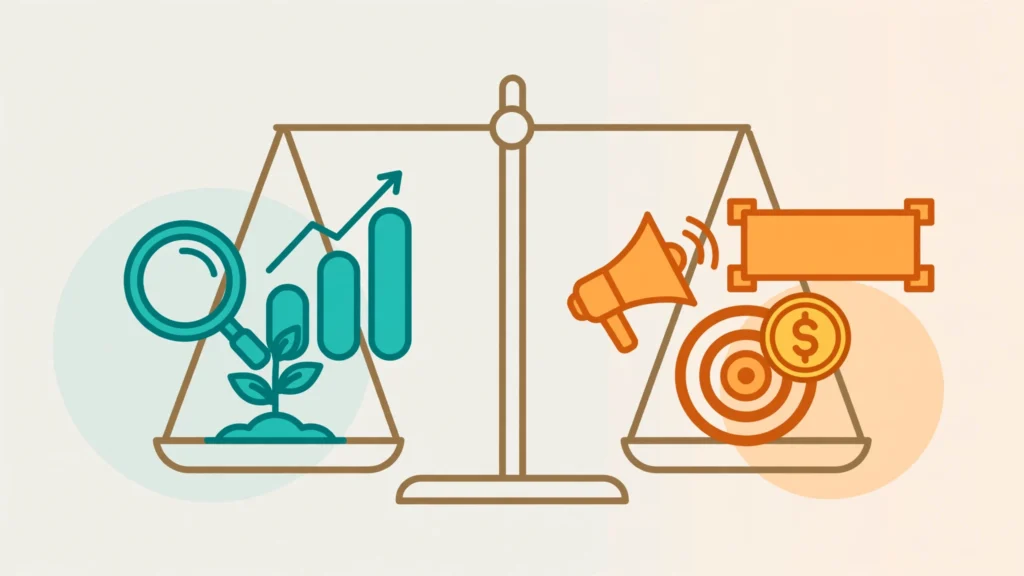
When it comes to SEO vs PPC, most business owners ask the question the wrong way. They want to know which channel is “better,” as if one must win and the other must lose. But in any honest SEO vs PPC comparison, the two are not versions of the same thing. They are two fundamentally different ways of buying growth, and the right choice depends on your budget, your timeline, and how long you can wait for the phone to ring. This guide gives you a practical, numbers-first framework for deciding where your marketing budget should go first in 2026. What Each Channel Actually Buys You Before comparing anything, get the definitions straight, because the confusion usually starts here. SEO (search engine optimization) is the process of earning visibility in Google’s unpaid results through technical improvements, better content, and authority building. You invest in work; Google rewards the work with free, ongoing traffic. PPC (pay-per-click), most commonly through Google Ads, is the process of buying visibility. You bid on keywords, your ad appears above the organic results, and you pay every time someone clicks. The traffic is instant, precise, and entirely conditional on your budget. Stop paying, and you disappear from the page the same day. That conditional visibility is the first thing any SEO vs PPC analysis must account for. The SEO vs PPC decision is really about timeline versus leverage. PPC buys you time — you get leads this week. SEO buys you leverage — you build an asset that keeps producing leads long after the invoices stop. SEO vs PPC: The Real Difference Nobody Explains Everyone knows PPC costs money per click and SEO takes time. What fewer people grasp is how differently the two channels behave once they are running. PPC behaves like renting an office. The space is great, it is exactly where you want it, and the landlord raises the rent whenever demand increases. Your competitors can bid on your keywords tomorrow and push your cost per click up 30 percent overnight. You have control over the ad copy, the landing page, and the budget, but you never own the asset. This is the detail most surface-level SEO vs PPC articles skip. SEO behaves like buying and renovating the building. It is slow, expensive upfront, and full of surprises during construction. But once the renovations are done and the building is full of tenants, you own the cash flow. A page that ranks number one for a valuable commercial keyword can replace thousands of dollars in monthly ad spend, month after month, without a per-click toll. This ownership difference is why so many businesses end up running both. They use PPC to fund the short term and SEO to eliminate the long-term dependency on ad platforms. If you are wondering how much SEO costs, the answer depends on your niche — but it is a project cost with compounding returns, not a meter that never stops running. The Cost Question: Which Drains Your Wallet More? In the SEO vs PPC cost comparison, the answer depends entirely on the time horizon you measure. In the first three to six months, PPC is almost always cheaper in absolute terms if you are starting small. You can launch a focused Google Ads campaign with a modest daily budget, drive clicks within hours, and know exactly what each lead costs you. SEO, by contrast, requires upfront investment in technical fixes, content, and link building before a single organic lead arrives. But zoom out to twelve months and the picture flips. Industry benchmarks consistently show that the average organic cost per lead is a fraction of paid search cost per lead — one 2026 industry dataset puts organic CPL roughly 68 percent lower than PPC CPL. PPC costs scale linearly with volume: double the clicks, double the spend. Run the SEO vs PPC math for your own niche and the crossover point usually lands between months nine and eighteen. SEO costs stay roughly flat while traffic compounds, which is what drives the long-run ROI advantage. There is also a hidden correlation worth knowing. There is a direct relationship between the cost-per-click of a Google Ads keyword and the cost of ranking for that keyword organically. Expensive clicks mean fierce competition, which also means expensive SEO. Extremely high-CPC keywords — think legal, finance, insurance — are costly in both channels. Extremely low-competition keywords, the kind most local businesses can win, are cheap in both channels and often the best place to start with SEO. SEO vs PPC Comparison Table: Cost, Time, ROI, and Control Here is the side-by-side breakdown most agencies use when recommending a starting channel to a client: Factor SEO PPC Cost model Project-based investment in content, technical work, and authority; no per-click fee Pay per click on every visit; costs rise with competition and volume Time to results 3–6 months for meaningful traction; 6–12 months for strong lead flow Days to weeks; traffic starts within hours of launch ROI trajectory Negative early, then compounding; accelerates as rankings stack Flat and predictable; roughly proportional to spend every month What happens when you stop Rankings decay gradually over months as competitors keep optimizing Traffic stops almost immediately Control Influenced, not controlled; Google’s algorithm has the final say High control over keywords, budget, ad copy, and scheduling Conversion quality Organic clicks typically convert at a higher rate because they carry editorial trust Intent is high, but ad skepticism can reduce click-through and conversion rates Data value Slower feedback; ranking changes take weeks to measure Instant keyword, ad, and conversion data you can act on immediately AI search impact Strong SEO increases your odds of being cited inside AI Overviews and chat answers Ads remain visible, but AI answers may reduce ad click volume for research queries The Timeline Problem: How Long Can You Afford to Wait? The SEO vs PPC timeline debate is the real decision engine for most businesses. Be honest with yourself here, because this is where