When it comes to SEO vs PPC, most business owners ask the question the wrong way. They want to know which channel is “better,” as if one must win and the other must lose. But in any honest SEO vs PPC comparison, the two are not versions of the same thing. They are two fundamentally different ways of buying growth, and the right choice depends on your budget, your timeline, and how long you can wait for the phone to ring. This guide gives you a practical, numbers-first framework for deciding where your marketing budget should go first in 2026.
What Each Channel Actually Buys You
Before comparing anything, get the definitions straight, because the confusion usually starts here. SEO (search engine optimization) is the process of earning visibility in Google’s unpaid results through technical improvements, better content, and authority building. You invest in work; Google rewards the work with free, ongoing traffic.
PPC (pay-per-click), most commonly through Google Ads, is the process of buying visibility. You bid on keywords, your ad appears above the organic results, and you pay every time someone clicks. The traffic is instant, precise, and entirely conditional on your budget. Stop paying, and you disappear from the page the same day. That conditional visibility is the first thing any SEO vs PPC analysis must account for.
The SEO vs PPC decision is really about timeline versus leverage. PPC buys you time — you get leads this week. SEO buys you leverage — you build an asset that keeps producing leads long after the invoices stop.
SEO vs PPC: The Real Difference Nobody Explains
Everyone knows PPC costs money per click and SEO takes time. What fewer people grasp is how differently the two channels behave once they are running.
PPC behaves like renting an office. The space is great, it is exactly where you want it, and the landlord raises the rent whenever demand increases. Your competitors can bid on your keywords tomorrow and push your cost per click up 30 percent overnight. You have control over the ad copy, the landing page, and the budget, but you never own the asset. This is the detail most surface-level SEO vs PPC articles skip.
SEO behaves like buying and renovating the building. It is slow, expensive upfront, and full of surprises during construction. But once the renovations are done and the building is full of tenants, you own the cash flow. A page that ranks number one for a valuable commercial keyword can replace thousands of dollars in monthly ad spend, month after month, without a per-click toll.
This ownership difference is why so many businesses end up running both. They use PPC to fund the short term and SEO to eliminate the long-term dependency on ad platforms. If you are wondering how much SEO costs, the answer depends on your niche — but it is a project cost with compounding returns, not a meter that never stops running.
The Cost Question: Which Drains Your Wallet More?
In the SEO vs PPC cost comparison, the answer depends entirely on the time horizon you measure.
In the first three to six months, PPC is almost always cheaper in absolute terms if you are starting small. You can launch a focused Google Ads campaign with a modest daily budget, drive clicks within hours, and know exactly what each lead costs you. SEO, by contrast, requires upfront investment in technical fixes, content, and link building before a single organic lead arrives.
But zoom out to twelve months and the picture flips. Industry benchmarks consistently show that the average organic cost per lead is a fraction of paid search cost per lead — one 2026 industry dataset puts organic CPL roughly 68 percent lower than PPC CPL. PPC costs scale linearly with volume: double the clicks, double the spend. Run the SEO vs PPC math for your own niche and the crossover point usually lands between months nine and eighteen. SEO costs stay roughly flat while traffic compounds, which is what drives the long-run ROI advantage.
There is also a hidden correlation worth knowing. There is a direct relationship between the cost-per-click of a Google Ads keyword and the cost of ranking for that keyword organically. Expensive clicks mean fierce competition, which also means expensive SEO. Extremely high-CPC keywords — think legal, finance, insurance — are costly in both channels. Extremely low-competition keywords, the kind most local businesses can win, are cheap in both channels and often the best place to start with SEO.
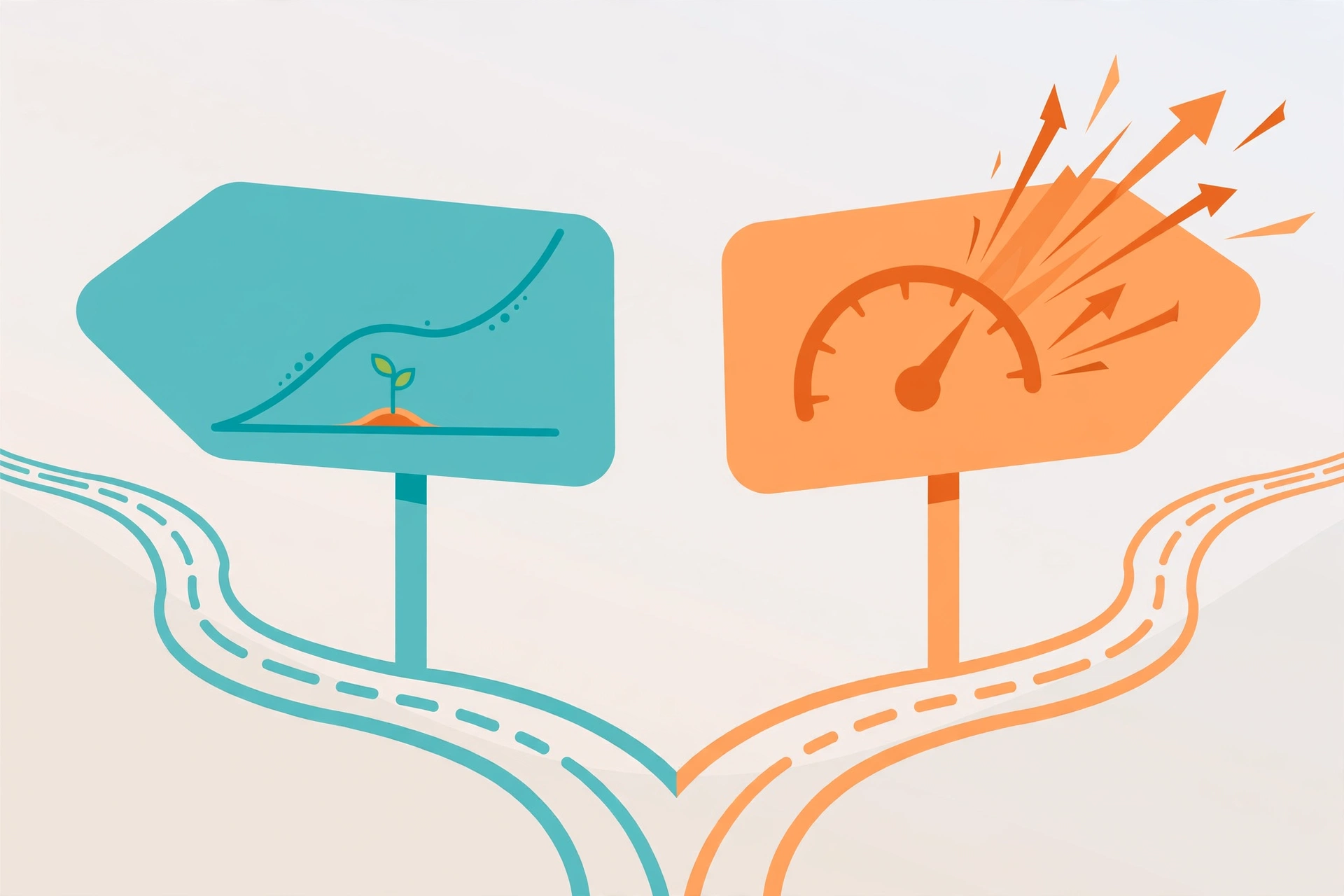
SEO vs PPC Comparison Table: Cost, Time, ROI, and Control
Here is the side-by-side breakdown most agencies use when recommending a starting channel to a client:
| Factor | SEO | PPC |
|---|---|---|
| Cost model | Project-based investment in content, technical work, and authority; no per-click fee | Pay per click on every visit; costs rise with competition and volume |
| Time to results | 3–6 months for meaningful traction; 6–12 months for strong lead flow | Days to weeks; traffic starts within hours of launch |
| ROI trajectory | Negative early, then compounding; accelerates as rankings stack | Flat and predictable; roughly proportional to spend every month |
| What happens when you stop | Rankings decay gradually over months as competitors keep optimizing | Traffic stops almost immediately |
| Control | Influenced, not controlled; Google’s algorithm has the final say | High control over keywords, budget, ad copy, and scheduling |
| Conversion quality | Organic clicks typically convert at a higher rate because they carry editorial trust | Intent is high, but ad skepticism can reduce click-through and conversion rates |
| Data value | Slower feedback; ranking changes take weeks to measure | Instant keyword, ad, and conversion data you can act on immediately |
| AI search impact | Strong SEO increases your odds of being cited inside AI Overviews and chat answers | Ads remain visible, but AI answers may reduce ad click volume for research queries |
The Timeline Problem: How Long Can You Afford to Wait?
The SEO vs PPC timeline debate is the real decision engine for most businesses. Be honest with yourself here, because this is where strategies succeed or fail.
If you need leads this month — a new location opening, a slow season to fill, a payroll to meet — there is no serious argument for SEO as your first investment. PPC can be live in days, and every dollar is measurable. You will pay a premium for that speed, but speed is exactly what you are buying.
If you can wait six to nine months, SEO becomes the better first investment. The businesses that start SEO early and stick with it are the ones still generating leads from work they did two years ago. The common failure mode is starting SEO, getting impatient at month three, and pausing — which is the worst of both worlds, because you paid the setup costs and captured none of the compounding returns.
A useful rule of thumb: if your business cannot survive six months without paid traffic, start with PPC and fund SEO with the profits. If you have the runway, start with SEO and add PPC later for testing and seasonal surges. In other words, the SEO vs PPC timeline question answers itself once you are honest about your runway.
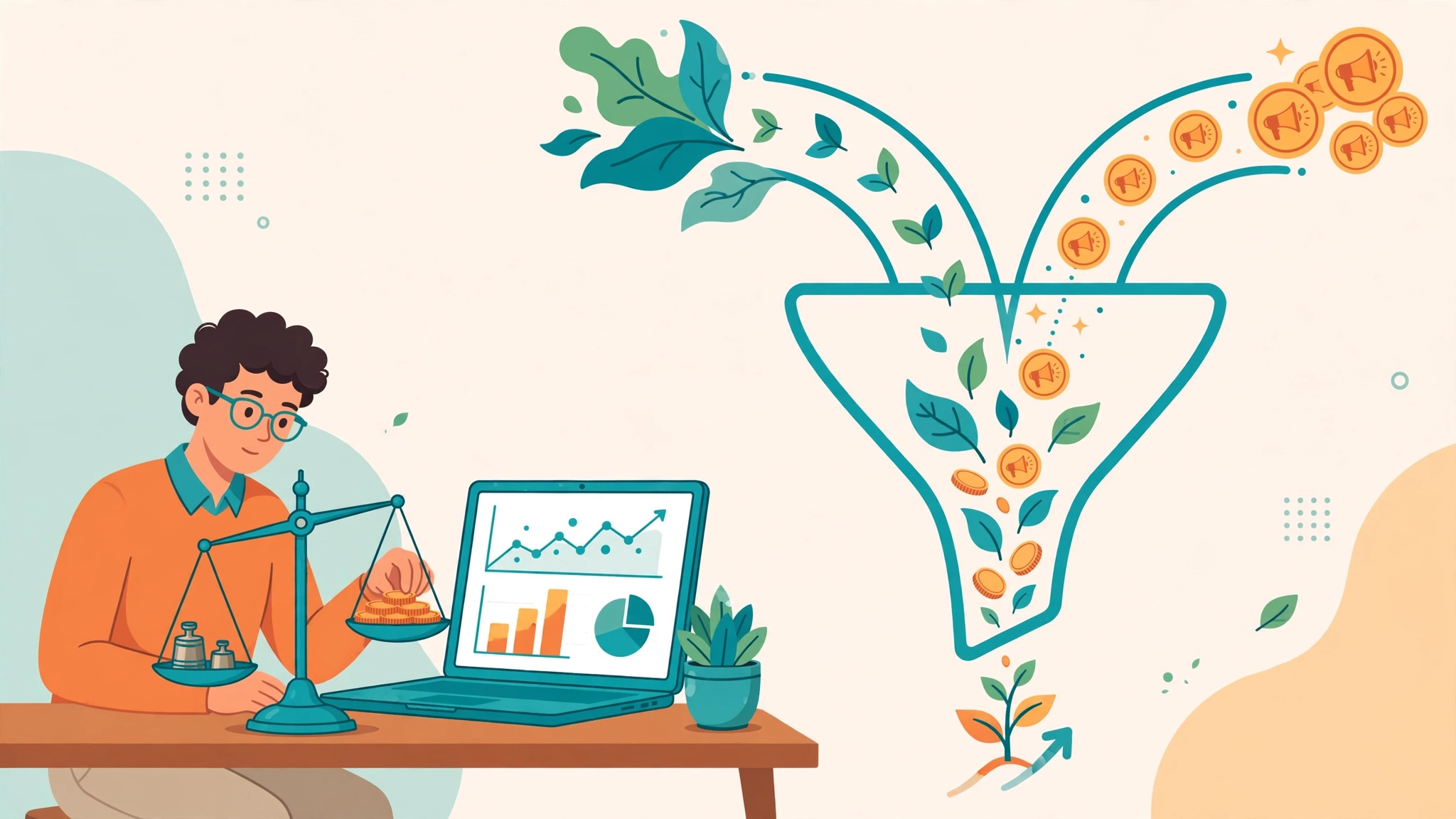
The Control Factor: What Each Channel Lets You Dictate
On the control front, SEO vs PPC differ sharply, and the difference matters most during launches and pivots.
PPC gives you a dashboard full of levers. You choose the keywords, the geography, the time of day, the budget ceiling, and the exact message. Running a promotion next week? Write new ads and you are live. Entering a new city? Duplicate the campaign and geotarget. That surgical control is why PPC is the default for testing: new products, new messaging, new landing pages all get validated fastest with paid traffic. That is why the SEO vs PPC control debate always favors paid when speed of experimentation matters.
SEO gives you influence, not control. You can build the best page on the internet for your target keyword and still wait months while Google decides. Algorithm updates can shuffle rankings with no warning. But the upside of that lack of control is credibility — users know you cannot buy an organic ranking, and that trust shows up in higher click-through and conversion rates for organic listings.
Smart businesses use the control of PPC to de-risk the patience of SEO. Run paid campaigns to discover which keywords actually convert, then build your SEO content around the proven winners instead of guessing.
The SEO vs PPC Decision Framework: 5 Questions to Answer
Forget the generic SEO vs PPC advice you have seen a dozen times. Work through these five questions and the right split will usually reveal itself:
- How many months of runway do you have? Less than 3: start with PPC. More than 9: start with SEO. In between: split the budget.
- What is your customer’s lifetime value? High lifetime value (professional services, B2B, home services) justifies the upfront SEO investment because each ranking pays for itself many times over. Low-margin, one-time purchases often need the instant volume of PPC.
- How expensive are your keywords in Google Ads? Check the auction prices. If clicks are cheap, PPC is an affordable bridge. If clicks are brutal, SEO is your escape route — and you should start digging now.
- Is your demand seasonal or time-sensitive? Launches, holidays, and deadline-driven services belong on PPC. Evergreen, research-heavy buying journeys belong on SEO.
- Can you produce genuinely better content than what ranks today? SEO in 2026 punishes generic content. If you can publish something clearly superior — deeper data, real experience, original visuals — SEO will reward you. If not, fix the content capability before spending on either channel. A good starting point is understanding how to rank in Google’s AI Overviews, since AI search now sits on top of traditional results.
Why the Smartest Businesses Eventually Run Both
One underrated use of SEO vs PPC data is that the channels make each other stronger. Here is how the combination typically works in practice:
- PPC feeds SEO strategy. Your search-term reports reveal the exact keywords that convert. That is the highest-quality keyword research you can buy — real conversion data, not search-volume estimates.
- SEO lowers PPC costs. High-quality landing pages and strong site authority improve Google Ads Quality Scores, which directly reduces your cost per click. The channels are technically separate, but quality bleeds across.
- Together they dominate the page. Holding both a top ad and a top organic result pushes competitors down and can lift combined click-through rate, because users see your brand twice and assume authority.
- PPC covers SEO’s blind spots. New pages that will take months to rank, seasonal offers, and experimental keywords can all ride on paid traffic while the organic asset matures underneath.
The realistic end state for a growing business is not one channel or the other. It is PPC as a percentage of spend that shrinks over time as SEO’s compounding returns take over the base load of lead generation. The businesses that make this transition successfully are the ones whose customer acquisition costs keep falling while their competitors keep paying the same CPC year after year. That falling acquisition cost is the quiet payoff of a well-sequenced SEO vs PPC strategy.
SEO vs PPC in the AI Search Era
One honest caveat for 2026: the search results page looks different than it did two years ago. AI Overviews now answer many queries directly at the top of the page, and AI chat tools answer others without a search page at all. This changes both channels, and it rewrites the SEO vs PPC playbook for research-stage queries.
For PPC, AI answers can reduce the volume of clicks available for research-stage queries, pushing more competition toward the remaining high-intent commercial searches. Expect auction prices on buyer keywords to stay elevated — another argument for building organic assets that do not depend on the auction.
For SEO, the stakes are higher but the opportunity is larger. Appearing inside AI-generated answers depends on the same authority signals that traditional SEO builds: strong rankings, clear entity definitions, and cited, trustworthy content. Businesses with no SEO footprint are invisible in both classic search and AI search. According to Google’s own Search Central documentation, following technical and content best practices remains the foundation of all search visibility — including AI-driven surfaces.
FAQs
Is SEO cheaper than PPC in the long run?
Generally yes. Once a page holds a strong organic ranking, it generates traffic without a per-click fee, while PPC costs scale linearly with every click. Industry benchmarks put average organic cost per lead roughly two-thirds lower than paid search. But SEO is not free — it requires ongoing content and technical maintenance to defend rankings as competitors keep optimizing.
How long does SEO take to work compared to PPC?
PPC can generate clicks within hours of launching a campaign, making it the clear winner for speed. SEO typically shows meaningful movement in three to six months, with strong lead flow arriving at six to twelve months depending on competition. The tradeoff is durability: SEO results compound and persist, while PPC traffic stops almost immediately when you pause spending.
Does running PPC improve my organic SEO rankings?
Not directly. Google has consistently stated that ad spend is not a ranking factor, so buying ads will not push your organic positions up. However, PPC improves SEO indirectly: it reveals which keywords actually convert, which sharpens your content strategy, and high-quality landing pages can lift Quality Scores that reduce your ad costs over time.
Should a brand-new business start with SEO or PPC?
Start with PPC for immediate visibility, because a brand-new website has no authority to rank organically yet. Run a tight, high-intent paid campaign for your first several months while building SEO foundations in parallel — content, technical fixes, and local profiles. As organic rankings mature, shift spend from paid toward the compounding channel.
Can I pause SEO the way I can pause PPC ads?
You can stop investing in new SEO work, and existing rankings often persist for months — unlike PPC, where traffic ends the day you pause. But rankings decay gradually as competitors keep publishing and Google’s definition of the best result evolves. Most businesses that pause SEO for six to twelve months find themselves rebuilding lost ground.
Is SEO still worth investing in with AI Overviews in 2026?
Yes, but it has to be stronger than generic content. AI Overviews do reduce clicks for some queries, yet appearing inside AI answers depends on the authority and rankings that SEO builds. Businesses with solid SEO are far more likely to be cited by AI search; businesses with none are invisible in both classic and AI-driven results.
If you are unsure where your business stands, start with the facts: a free site audit at ssaagency.us will show you exactly which keywords you could own organically, which ones are worth renting through ads, and the realistic timeline for each — so your SEO vs PPC decision is based on your data, not guesswork.