Key takeaways
- Broken link building means finding dead links, creating a genuinely useful replacement page, and politely telling the linking site about it.
- It is not a guaranteed tactic. Ahrefs, which wrote one of the best-known guides, says plainly that it sometimes works well and sometimes does not.
- The Wayback Machine helps you see what a dead page contained, but it does not archive every site.
- Google’s link spam policy targets links created mainly to manipulate rankings, such as paid links without qualification and automated link creation. Genuine, editorial outreach is different.
- The replacement page has to be a real match. Quality of fit matters more than volume of emails.
Broken link building is a tactic where the site owner benefits as well as you. They fix a dead link that frustrates their readers, and you may earn a relevant, editorially placed link. This broken link building step by step guide follows the process described in Ahrefs’ widely used guide, adds Google’s own guidance on links and status codes, and gives you a worked example. It makes no promises about response rates, because nobody can promise them honestly.
What broken link building is
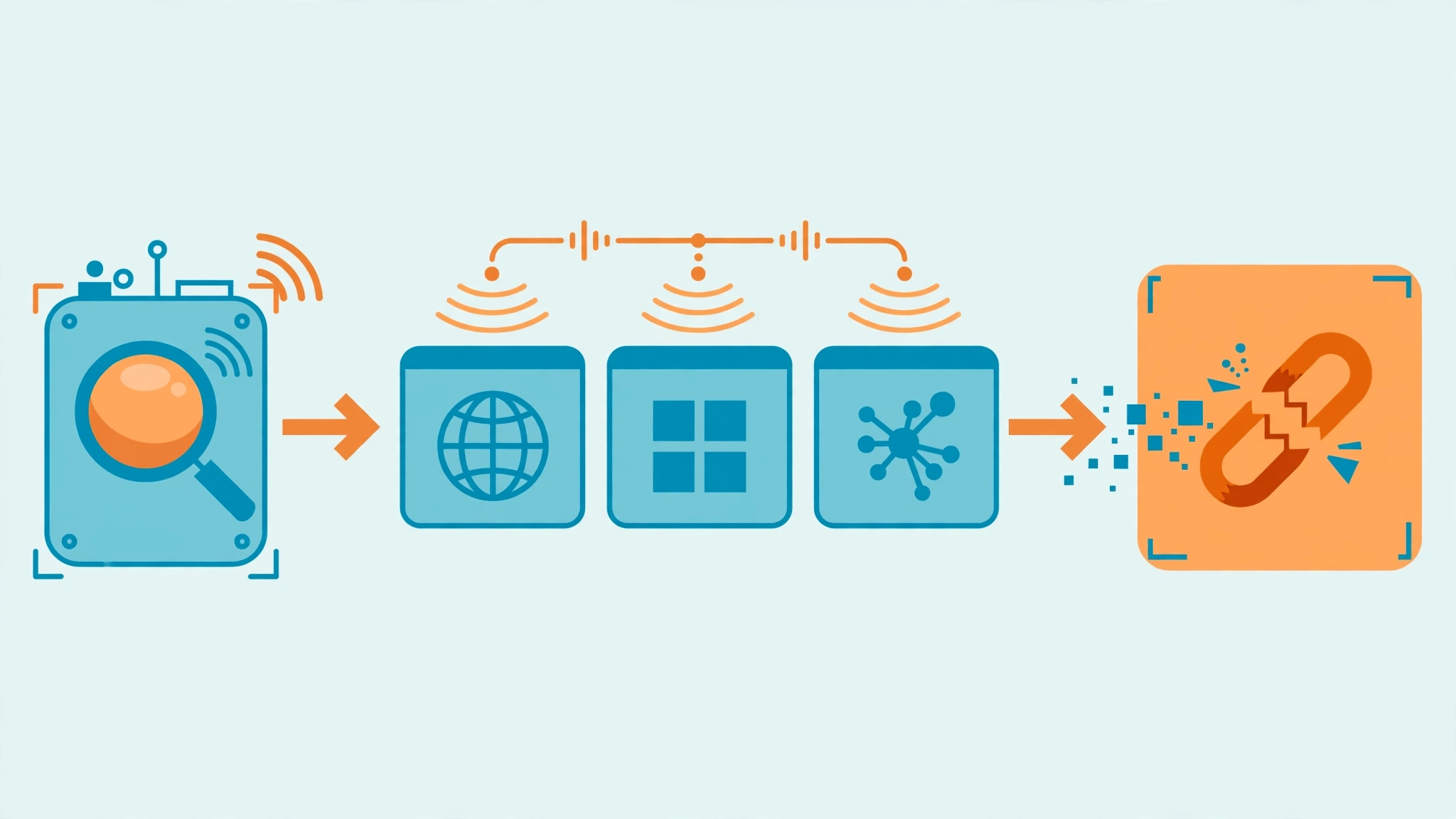
Pages get deleted, sites shut down, and URLs change. Pages that linked to them are left pointing at errors. Google’s documentation says that URLs returning a 4xx status such as 404 are not used for content, and that a previously indexed URL that returns one is removed from the index. For the linking page, that means a reader hits a dead end. The tactic works like this:
- Find a dead page that other sites link to, or a dead outbound link on a relevant page.
- Work out what the dead page was about and why people linked to it.
- Publish a replacement page on your own site that serves the same need, ideally better.
- Contact the linking site, show them the broken link, and suggest the replacement.
Ahrefs frames the same four stages as finding broken pages with backlinks, vetting prospects, creating a replacement, and doing outreach. It also notes that broken link building is not easy and that conversion rates for mass, shotgun-style outreach will be low.
Step 1: Find broken pages that have links
Ahrefs describes four routes:
- Competitors’ dead pages: in a backlink tool, look at a competitor’s most-linked pages, filter for 404 responses, and sort by the number of referring domains.
- Broken pages on a topic: search a topic for pages that are broken, then filter by a minimum number of referring domains.
- Broken outbound links on competitor sites: use a broken-links report for a competing domain and sort the dead URLs by referring domains.
- Resource pages: search Google for curated link pages in your niche using operators such as your keyword combined with intitle:resources or inurl:links, then scan those pages for dead links. Ahrefs mentions its free SEO Toolbar for this check.
You do not need a paid tool to start. Any link checker or crawler that reports HTTP status codes can scan a page, and you can verify a suspected dead link by opening it yourself. Record each find in a sheet: the linking page, the dead URL, the anchor text, and the site’s contact route.
Step 2: Vet the prospects
Not every dead link deserves your time. Ahrefs suggests checking whether the dead page had quality backlinks and understanding why people linked to it. Use a simple filter:
| Check | Good sign | Warning sign |
|---|---|---|
| Site quality | A real site with a real audience in your niche | A thin directory or link farm |
| Link context | The link sits in the body of useful content | The link is in a footer, sidebar, or comment |
| Topical fit | You can credibly cover the same topic | You would have to stretch to make it relevant |
| Other linkers | Several sites linked to the dead page | Only one stray link |
| Link type | Standard link | Marked nofollow, sponsored, or ugc, which may carry less ranking weight |
Google’s own documentation says links can be qualified with nofollow, sponsored, or ugc attributes. A qualified link can still send visitors, but do not assume it behaves like a standard link when you estimate value.
Step 3: Reconstruct what the dead page said
You cannot replace what you cannot see. The Internet Archive’s Wayback Machine lets you enter a URL and browse its capture history. Captures marked in blue are successful ones, green are redirects, orange are client errors, and red are server errors. Be aware of its limits. The Archive says not every site is archived, pages may be incomplete, and sites blocked by robots.txt or password protected may be missing. Captures can also take hours to appear.
Ahrefs adds a useful analytical step: examine the live backlinks pointing at the dead page and classify them. General links have no stated reason. Deep links show a specific reason in the link context, such as a statistic or a template. Search the anchors and surrounding text for recurring phrases to see what people valued, so your replacement can include it.
Step 4: Build a replacement worth linking to
This is where most campaigns succeed or fail. A webmaster will not swap a working link for a thin page. Use this checklist:
- Cover the same need. Match the intent of the dead page, as shown by the archive and the anchors.
- Update everything. Replace stale figures, screenshots, and examples, and cite primary sources.
- Improve the structure. Use clear headings, steps, and tables where they help readers.
- Add what was missing. Answer the questions the original ignored.
- Show who wrote it. A named author and honest sourcing align with Google’s people-first content guidance.
If you are putting together a broader content plan, our guide to ranking in Google AI Overviews explains how clear, well-structured pages also help in AI-generated answers.
Step 5: Do outreach that respects the reader
Ahrefs recommends a hybrid approach rather than pure shotgun outreach (mass identical emails) or fully unique emails to everyone. Write a separate personalized message for each group of deep linkers that mentions the specific reason they linked, and use a more general message with a summary of your improvements for general linkers. Include a screenshot of where the broken link appears so the owner can see it instantly. Mass identical emails risk burning bridges and getting your domain blocked.
Example scenario: Imagine a hypothetical home-energy blog that finds a “Heat pump sizing guide” page, now returning a 404, which is linked from a regional utility’s resource page.
- Research: the Wayback Machine shows the dead page was a step-by-step sizing worksheet. Anchor texts on other linking pages say “sizing worksheet” and “how to size a heat pump”.
- Replacement: the blog publishes an updated sizing guide with a worksheet, a table of climate factors, and a section on common errors, with named, qualified authorship.
- Outreach: the writer emails the resource page’s maintainer.
A hypothetical email might read:
Subject: Broken link on your heat pump resources page
Hi Dana, while reading your heat pump resources page I noticed the link under “Sizing” now returns a 404 (screenshot attached). It used to lead to a sizing worksheet. We recently published an updated sizing guide with a worksheet that may be a useful replacement, here: [URL]. Either way, thanks for maintaining such a helpful list.
The email names the exact location of the problem, makes one request, and stays brief. It makes no claim about what will happen. Follow up once if you hear nothing, and then move on.
Stay inside Google’s link policies
Google’s link spam definition covers links created primarily to manipulate rankings. Its examples include buying or selling links for ranking, excessive link exchanges, automated link creation, and optimized anchor text in advertorials or guest posts. Genuine outreach where a site owner chooses to replace a dead link is a different situation, but you can still cross the line by offering payment or gifts for a link, or by sending thousands of automated messages. If a link is paid, Google says it should be qualified with nofollow or sponsored. Keep the exchange simple: you point out a real problem and suggest a relevant resource, and the owner decides.
Anchor text is the owner’s call, but good anchor text is concise, specific, and relevant to both pages, according to Google’s link best practices. Do not request keyword-stuffed anchors.
Track what matters
- Outreach log: date, contact, dead URL, replacement, response.
- Placed links: verify they are live and note whether they are qualified.
- Replacement page performance: impressions, clicks, and referral visits in your analytics.
- Time spent versus links earned: use your own numbers to decide whether the tactic is worth it for you. If you are comparing channels, our overview of how much SEO costs can help frame the trade-offs.
Common mistakes
- Pitching an irrelevant replacement. A tenuous match gets ignored, and rightly.
- Targeting low-quality sites. A link on a site with no real audience adds little.
- Sending identical mass emails. Ahrefs warns this risks burning bridges.
- Not verifying the link is dead. Check it yourself first. Some links fail temporarily.
- Replacing without improving. Cloning a dead page from the archive without updating it is a weak offer, and may raise copyright concerns if you copy text. Rebuild from the idea, not the words.
- Ignoring qualified links. A nofollow link can still bring readers, but plan accordingly.
Frequently asked questions
Is broken link building still worth doing?
It can be, if you have a genuinely useful replacement and a focused list of relevant sites. Expect uneven results, and judge it by your own tracking.
Can I copy the archived page?
Do not copy text from the archive. Use it to understand the topic and the reasons people linked, then write something original and better.
Should I follow up?
One polite follow-up is reasonable. After that, move on.
If you want help building a link program that fits Google’s guidelines, you can reach us at ssaagency.us/contact.