Broken link building is one of the few link acquisition tactics where everybody wins: the site owner fixes a dead link that hurts their user experience, and you earn a high-quality, editorially placed backlink. This step-by-step guide shows you exactly how to find dead links at scale, create replacement content that site owners actually want, and run outreach that converts. Whether you run broken link building yourself or outsource it, the workflow below will keep your opportunity pipeline full. If you want a white-hat backlink strategy that keeps working long after paid links stop, this is it.
What Is Broken Link Building?
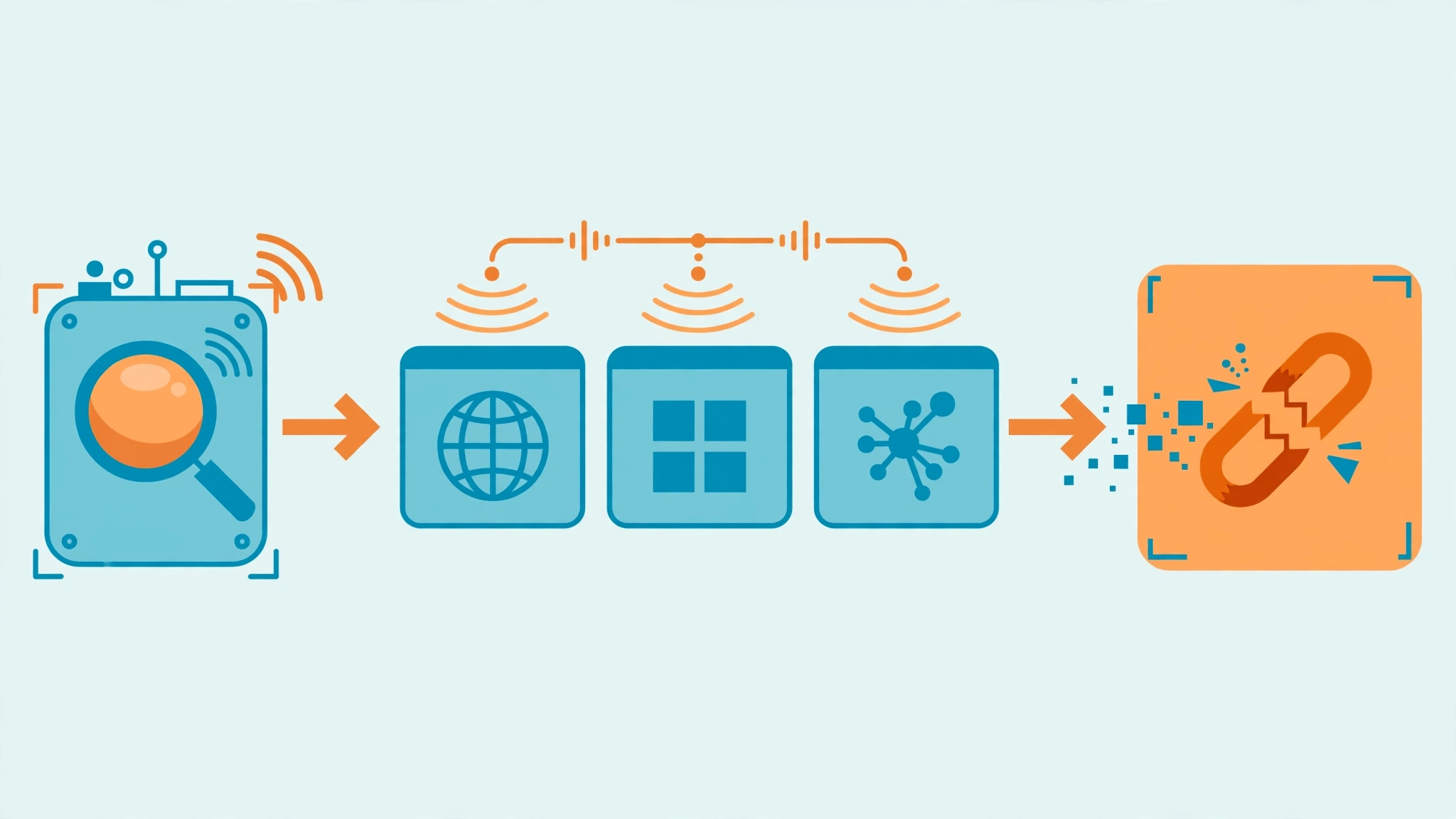
Broken link building is an SEO tactic built on a simple observation: the web is full of dead links. Pages get deleted, websites shut down, URLs change — and the pages that linked to them are left pointing at 404 errors. The tactic works like this: you find those dead outbound links on sites in your niche, create (or already have) a worthy replacement page on your own site, then email the site owner to report the broken link and suggest your content as the fix. Most practitioners describe it in exactly these terms: find a dead page with lots of links, build an alternative on your own site, and tell the linkers about it.
Because you are reporting a genuine defect and handing over the solution, response rates are dramatically higher than ordinary cold outreach — some SEOs report conversion rates ten times higher or more. It is also fully white-hat: Google’s own link spam policies target manipulative schemes, not genuine outreach where a site owner editorially chooses to link to a better resource.
Why This Tactic Works So Well
Most cold link outreach fails because the pitch is all take and no give. You ask a stranger to link to your page, and in return they get nothing but the vague promise of “great content.” Broken link building flips the dynamic. You arrive with a gift: you found a problem on their site, you documented it, and you solved it for them. That framing changes the psychology of the exchange completely.
There are three more reasons broken link building outperforms almost everything else in the white-hat playbook:
- Relevance is built in. The dead page was linked because it matched the linking page’s topic. Your replacement on the same topic is therefore relevant by definition — no awkward forced anchor text, no off-topic placement.
- Editorial placement. The link goes in the body of existing, indexed, authoritative content — exactly the kind of link Google trusts most.
- Compounding supply. The web decays constantly. New broken links appear every day as sites migrate, rebrand, and shut down, so the opportunity pipeline never truly dries up.
Before you invest in any outreach program, it helps to know what link acquisition actually costs, so you can compare channels fairly. Our breakdown of how much SEO costs shows why a broken link building approach that converts at multiples of normal outreach deserves a permanent line in your budget.
Step 1: Find Broken Link Opportunities
You have two reliable routes to broken link prospects, and experienced broken link building practitioners use both. The first is resource-page prospecting: use Google search operators to find pages in your niche that curate links, then scan them for dead outbound links. Try queries like these, swapping in your niche keyword:
- your keyword inurl:resources
- your keyword intitle:links
- your keyword inurl:links “resources”
- “best your keyword tools” intitle:resources
Open the promising pages and run a dead-link checker over them. Free options include the Check My Links Chrome extension and Ahrefs’ free Broken Link Checker. Record every 404 you find in a spreadsheet: the linking page URL, the dead URL, the anchor text, and the site’s contact page.
The second route is competitor backlink mining: plug a competitor into a backlink tool, filter their backlink profile for broken pages (HTTP 404), and sort by referring domains. This surfaces dead pages that many sites still link to — one great replacement asset can unlock dozens of placements. A broken page with 50 referring domains is worth more than fifty random resource pages, because all of those linkers already wanted this exact content.
Step 2: Vet and Prioritize Your Prospects
Not every broken link deserves your effort. A dead link on a spammy directory with zero traffic is worth less than nothing — it costs you outreach time and earns you a link Google may ignore. Vet every prospect against a simple filter before it enters your pipeline:
| Check | What to look for | Why it matters |
|---|---|---|
| Domain quality | Real site, real traffic, real audience in your niche | Links only move rankings when the linking domain has trust |
| Link context | The dead link sits in genuine editorial content, not a comment or footer | Editorial links carry the most ranking power |
| Topical fit | The linking page’s topic matches content you can credibly create | You can only replace content you can genuinely improve |
| Referring domains | The dead page itself has other sites linking to it | More linkers = more placements from one asset |
| Dofollow status | The link is a standard follow link | Nofollow links have branding value but pass less authority |
Be ruthless here. Ten qualified prospects will outperform a hundred unqualified ones, because every hour you spend writing replacement content for a worthless link is an hour stolen from a link that could actually move rankings. This discipline is also what keeps broken link building sustainable: a small, high-quality pipeline you can run every month beats a massive spreadsheet you abandon after two weeks.
Step 3: Reconstruct the Dead Content
You know a link is broken. Now you need to know what the dead page was about, so your replacement matches the intent the linkers originally wanted. The Internet Archive’s Wayback Machine is your best friend here: paste the dead URL into web.archive.org and browse the most recent snapshots. Note the page’s topic, structure, key statistics, and the angle it took. Accurate reconstruction is a core broken link building skill — match the original intent and your replacement will convert.
Next, check the anchor text used by the linking pages. Anchor text tells you why each site linked — one site might have linked for the statistics while another linked for the how-to steps. If you can see a pattern in the anchors, you know exactly which elements your replacement must include. Finally, glance at the top-ranking pages for the dead page’s target keyword today. Your replacement needs to be at least as good as what currently ranks, not just as good as what died years ago.
Step 4: Create a Better Replacement Page
Here is the step most people skip, and the reason most broken link building campaigns underperform: the replacement content has to be genuinely better than the original. A webmaster will not swap a dead link for a thin, half-hearted page. Your replacement should be the resource you would be proud to recommend to anyone.
Use this upgrade checklist when you build it:
- Update everything. Refresh statistics, screenshots, examples, and tools. Old data is the most common reason the original died — make freshness your weapon.
- Clarify the structure. Turn walls of text into scannable sections, steps, and bullet lists.
- Add what was missing. Cover the subtopics the original skipped, answer the questions its readers would have asked, and include visuals like charts or infographics.
- Match the linking intent. If most linkers cited it for its data, lead with data. If they cited the how-to, make the how-to exceptional.
- Make it link-worthy standalone. The page should earn links on its own merits — the outreach just accelerates discovery.
One replacement asset can serve many prospects, so invest accordingly. A single outstanding guide can be pitched to every site linking to the same dead page, which is how broken link building achieves its famous efficiency. If you are building this asset strategy into a broader content program, our guide on ranking in Google AI Overviews explains how to structure content so it gets cited by both classic search and AI answers — the same clarity that wins linkers wins algorithms.

Step 5: Run Outreach That Converts
Now comes the broken link building pitch, and the rules are simple: be short, be specific, and lead with the broken link — not with yourself. Site owners get dozens of link beg emails a week; yours stands out because it reports a real defect on their site. A proven template structure looks like this:
Subject: Quick heads-up: broken link on [Page Title]
Body: Hi [Name], I was reading your excellent guide on [topic] and noticed the link to [dead page title] under [section] is broken — it returns a 404. I recently published [your page title], which covers [the same topic] with updated [data/steps/examples]. It might make a solid replacement if you’re fixing the page. Either way, thanks for the great resource! Best, [Your Name]
Three details make or break this email. First, name the exact location of the broken link — the section or paragraph — so the owner can verify it in seconds. Second, keep it to one link and one ask; laundry lists of your content look like spam. Third, personalize the opener with something specific about their page, which proves you actually read it. Send from a real name at your domain, follow up once after 5–7 days (follow-ups routinely lift placement rates by a quarter or more), and never send a second follow-up — persistence turns helpful into annoying.
Stay firmly on the white-hat side of the line. Google’s spam policies are clear that manipulative link schemes — buying links, excessive link exchanges, automated link creation — can trigger penalties, while genuine broken link building outreach that earns editorial links is exactly how the web is supposed to work. This approach sits squarely in the safe zone because the site owner makes an independent editorial decision.
Step 6: Follow Up and Track Results
Outreach is only half the broken link building job; the other half is the system that keeps it running. Log every email in your spreadsheet with the date sent, the broken link reported, your replacement URL, and the outcome. When a placement lands, verify the link is live and dofollow, then send a short thank-you — that goodwill often leads to future links without any further outreach.
Measure what matters:
- Placement rate: links earned divided by emails sent. A healthy campaign converts at 5–15% including follow-ups.
- Link quality: average authority and traffic of linking domains, not raw count.
- Ranking movement: track your replacement page’s target keyword over 60–90 days.
- Referral traffic: real clicks from the new links, which also signal genuine editorial value.
Finally, make broken link building a recurring process rather than a one-off project. Set a monthly routine: one prospecting session, one replacement asset per quarter, one outreach batch per week. The web keeps breaking, which means the pipeline keeps refilling — the SEOs who win are the ones who never stop running it.
Common Mistakes That Kill Your Campaign
Most failed broken link building campaigns fail for the same handful of reasons, and all of them are avoidable. Pitching irrelevant replacements is the biggest killer: if your page is only tangentially related to the dead content, the webmaster will ignore you — and rightly so. Targeting low-quality sites wastes your best asset on links that cannot move rankings. Sending generic mass emails without naming the exact broken link location gets you deleted with the other spam. Skipping the follow-up leaves placements on the table, since busy site owners often intend to fix the link and simply forget. And giving up after one batch mistakes a compounding, long-term channel for a quick win. Treat broken link building like a system with monthly inputs and it will pay you back for years.
FAQs
What is broken link building in simple terms?
Broken link building is an SEO tactic where you find dead hyperlinks on other websites, create a strong replacement page on your own site, and email the site owners suggesting your content as the fix. Because you report a real problem and hand over the solution, response rates far exceed ordinary link requests.
Which free tools can I use to find broken links?
Use the Check My Links Chrome extension to scan individual pages, Ahrefs’ free Broken Link Checker to audit whole sites, and Google operators like inurl:resources to discover link-heavy resource pages. The Internet Archive’s Wayback Machine reconstructs dead pages for free. Together they cover discovery, verification, and content research with no paid subscription.
Is broken link building still effective in 2026?
Yes. It remains effective because it rests on something permanent: sites constantly change, pages get deleted, and links break every day. Webmasters will always welcome someone who reports a broken link and offers a ready-made replacement. It is fully white-hat too — the linking decision stays editorial — so it stays safe through every algorithm update.
How can I increase my broken link building outreach success rate?
Pitch replacements matching the dead content, name the exact broken-link location so the owner can verify it instantly, and keep the email under 100 words. Personalize the opener, send from a real name on your domain, and follow up once after a week — that single nudge routinely lifts placements by a quarter or more.
What should I do if a webmaster refuses to replace the link?
Thank them politely and move on. A refusal usually means your content was not a close enough match or the page is being redesigned — neither is fixable in that email. Log the outcome, note any feedback, and redirect your effort to the next prospect. With a healthy pipeline of qualified opportunities, individual rejections are statistically irrelevant.
What metrics should I track for broken link building campaigns?
Track placement rate (links earned per email sent), linking-domain authority and organic traffic, ranking movement for your replacement page’s keyword over 60–90 days, and referral traffic from new links. These four show whether your prospecting, content, and outreach each pull their weight, and make broken link building easy to compare against other channels.
This strategy rewards the patient and the precise: find real dead links, build replacements worth linking to, and pitch like a helpful human. Run that loop every month and the backlinks compound. If you would rather have specialists build and run the whole broken link building system for you, get a free site audit at ssaagency.us and we will map your best broken link opportunities in your niche.