A guest post follow up email is a short, polite message sent after a pitch that has not received a reply. Editors are busy and inboxes are crowded, so silence is often a scheduling problem, not a verdict. This guide gives you a three-touch schedule, copy-ready templates, advice on subject lines and threads, a plan for the awkward case where an editor said “interested” and then vanished, and the compliance basics that keep outreach on the right side of Google’s policies and email law. It is written as a practical guide, and the timings are suggested starting points rather than measured benchmarks.
Key takeaways
- Follow up at most three times, spaced a few days apart, and then stop.
- Each message should have a different job: remind, add value, then close politely.
- Keep follow-ups short. Restate the idea in one line and make the next step easy.
- Outreach email is covered by the CAN-SPAM Act, which makes no exception for business-to-business email.
- Guest posts that exist mainly to pass ranking credit can fall under Google’s link spam policy. Pitch to give readers something useful, not to place links.
Why follow up at all
A first email asks a stranger for a favor at an arbitrary moment. It can arrive during a launch, behind a stack of newer messages, or when the editor is away. A short reminder gives the editor another chance to see an idea that was reasonable the first time. Following up also makes your list better: editors who answer a polite reminder are the ones who are actually looking for contributors.
The aim is to be easy to answer. If a reply takes ten seconds and carries no social cost, you have done your job, even if the answer is no. A clear “not for us” is useful too, because it lets you stop spending time on that prospect and redirect the idea to a better-fitting publication.
Make the first pitch easy to follow up
A good follow-up starts with a good pitch. Before you send anything, check four things.
- Fit: you have read recent articles on the site and your idea is not a repeat of something already published.
- Specificity: the pitch names one headline, one audience problem, and two or three points the article will cover.
- Credibility: one line about why you can write it, with a link to relevant published work if you have any.
- Contact: the right person. Many publications name a contributor email or form, and sending to the wrong inbox is the most common reason for silence.
If those four are missing, a reminder only repeats the weakness. Fix the pitch first.
A three-touch schedule
These timings are suggestions you can adjust to the publication’s rhythm. Check the site’s contributor page first, because many publications state how long they take to respond, and you should follow what they say.
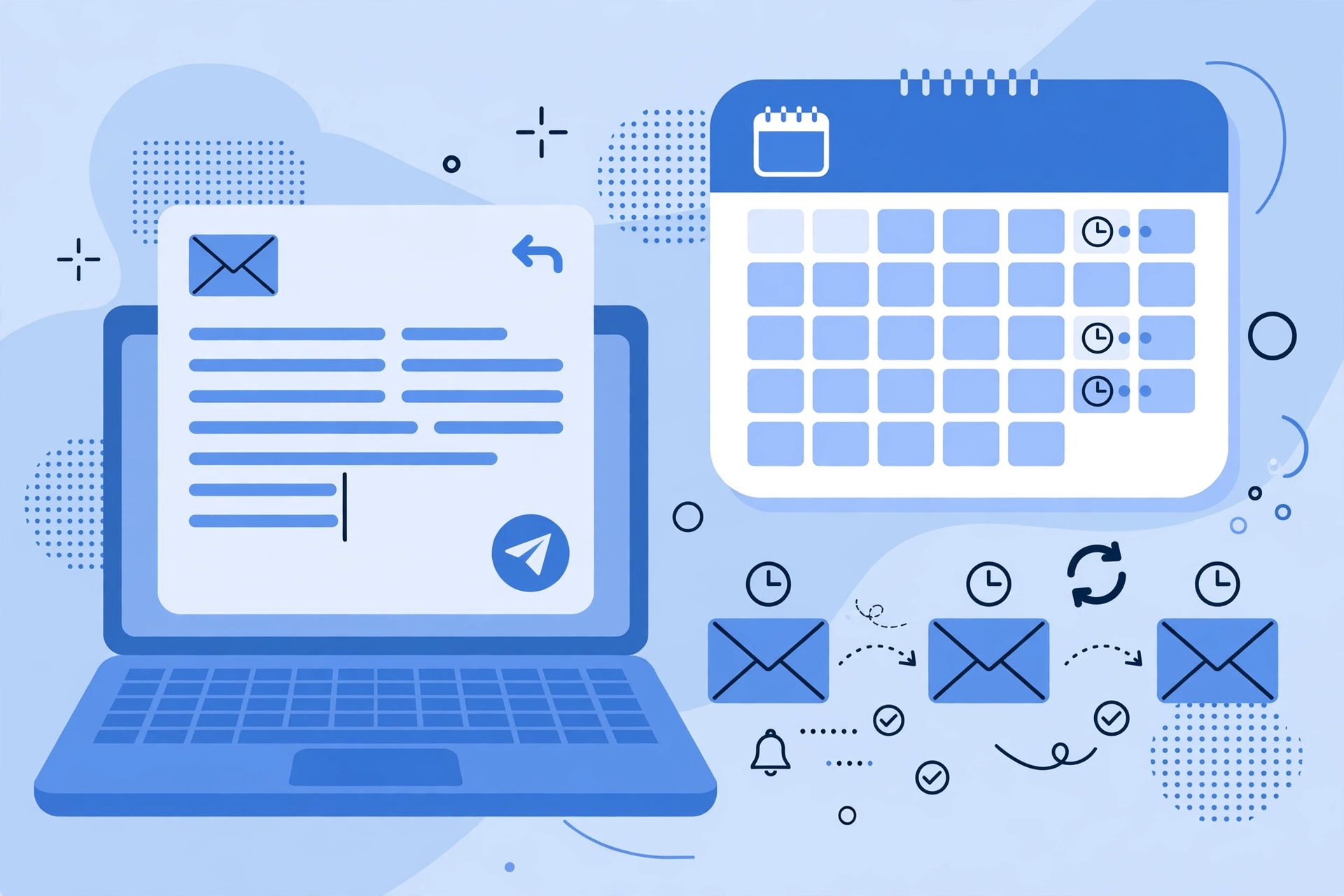
| Touch | Suggested timing | Job | Thread |
|---|---|---|---|
| Pitch | Day 0 | Introduce one specific idea | New email |
| Follow-up 1 | About 4 to 5 days later | Gentle reminder with the idea in one line | Reply in the same thread |
| Follow-up 2 | About 9 to 10 days after the pitch | Add something new: a second angle or a specific observation | New subject line |
| Follow-up 3 | About 14 to 16 days after the pitch | Close politely, no reply needed | Short standalone email |
Avoid weekends, avoid sending two emails in a week, and never send daily reminders. After the third touch, stop.
Template 1: the gentle reminder
Keep it under about 80 words so it reads on a phone screen.
Subject: keep the original thread
Hi [First Name],

Following up on the idea I sent on [day]: "[Proposed headline]" for [Publication].

In short, it would help your readers [one-line benefit]. I can send a short outline if useful.

Thanks,
[Your name]
Replace every bracket with specifics before sending. A message that still shows placeholders is worse than no message.
Template 2: the added-value follow-up
If the reminder was ignored, repeating it adds nothing. Bring one new thing: a second angle that suits the publication, or an observation drawn from a recent piece they published.
Subject: A second idea for [Publication]
Hi [First Name],

I read your recent piece on [specific article] and thought a follow-on might suit your readers: "[New headline]", covering [specific gap].

My original idea ("[Original headline]") still stands if you prefer it. Either way, I am happy to send an outline.

[Your name]
Only reference an article you have actually read, and make the observation true. Invented flattery is easy to spot.
Template 3: the polite close
Subject: Closing the loop
Hi [First Name],

I will assume the timing is not right and close this out on my end. No reply needed.

If your needs change, I would be glad to contribute to [Publication] in future.

Thanks for your time,
[Your name]
This message works because it removes pressure. It also leaves the door open without promising another reminder.
Subject lines and threads
- First reminder: reply in the same thread, so the editor can see your original pitch directly below.
- Second follow-up: a new subject line makes sense because the content is new. Make it specific and name the publication.
- Close: a short, plain subject. Do not add a fake “Re:” to a new thread, and avoid capital letters or hype.
When the editor said “interested” and then went quiet
This case deserves different handling because the editor has already shown interest. You are not re-pitching, you are helping a stalled conversation move.
Example scenario: an editor replies on Monday, “Sounds interesting, send an outline.” You send it on Tuesday. Nothing arrives for a week.
- Wait about a week from the outline, then reply in the same thread.
- Give the editor an easy exit: “If priorities have shifted, no problem at all.”
- Offer flexibility: “Happy to adjust the angle for your calendar.”
- If still nothing after another week, offer to send a full draft, since some editors find a draft easier to react to than an outline.
- Then close politely and move on. Two reminders are enough.
Stay compliant
Two sets of rules matter here, and neither is optional.
Email law
The FTC states that the CAN-SPAM Act “makes no exception for business-to-business email.” Its compliance guide lists requirements including accurate header information, honest subject lines, a valid physical postal address, a clear way to opt out, and honoring opt-out requests within 10 business days. The FTC also notes that each separate violating email can be subject to penalties. Whether your pitch counts as a commercial message depends on its content and purpose, so if you are unsure, get legal advice and always honor a request to stop.
Google’s link policies
Google’s spam policies describe link spam as creating links to or from a site mainly to manipulate rankings, and they name large-scale guest posting campaigns with keyword-rich anchor text among the examples. If money, goods or services change hands for a link, the link should be qualified with rel=”sponsored” or rel=”nofollow”. The practical lesson for outreach: pitch useful articles for a real audience, expect editors to decide how to link, and never make a link a condition of publication.
Track it simply
A spreadsheet is enough. Use columns for prospect, publication, contact, pitch date, follow-up dates, status and notes. Set reminders when you send the pitch. Mark anything past the close date as closed, and note any editor who asks not to be contacted so you never email them again. After a batch, review which message got replies and what kind of publication responded. Those observations are your own data, which will tell you more than general rules.
Sort replies into a few simple buckets: accepted, asked for changes, declined, and no response. Declines with a reason are the most valuable, because they tell you what to adjust in the next pitch, whether that is the topic, the level of detail or the choice of publication.
Coming back later
A closed thread is a pause, not a permanent end, unless the editor asked you to stop. If you return after a couple of months, send a new email with a new idea tied to something current, such as a recent article from the publication or a development in the topic. Do not refer to the earlier reminders. Keep the same short format and the same courtesy. If an editor ever tells you they are not interested, thank them, record it, and do not pitch that person again.
A quick pre-send checklist
- Every placeholder is replaced and the editor’s name is spelled correctly.
- The message fits on one phone screen.
- There is exactly one question or next step.
- Your signature includes your name and a way to identify who you are.
- You are not offering or requesting payment for a link.
Common mistakes
- Guilt trips such as “Did my emails go to spam?” Nobody rewards that framing.
- Daily reminders. They look automated and desperate.
- Copying the editor’s manager. It is disproportionate for a guest post pitch.
- Pitching a new topic in every message. One extra angle is useful, a rotating menu looks scattered.
- Skipping research. Reminders cannot repair a pitch that did not fit the publication. See our guides to guest post outreach mistakes and outreach email templates, and the overview of guest post outreach.
Frequently asked questions
How many follow-ups is too many?
More than three. After the polite close, wait a couple of months before pitching a genuinely different idea, in a fresh email.
Should I follow up if the site’s guidelines say they only reply to accepted pitches?
No. Respect the stated policy and move on.
Can I attach a full draft in a follow-up?
Only if the publication accepts drafts. Otherwise a short outline is safer.
Sources
- FTC: CAN-SPAM Act, a compliance guide for business
- Google Search Central: Spam policies, link spam
- Google Search Central: Qualify your outbound links
If you want outreach handled for you, you can contact SSA Agency.