Your rankings are up. Your impressions are up. Your traffic is down. If that sentence describes your analytics dashboard, you’re living through the zero-click era — and you need a zero click search strategy before the gap gets wider.
A zero-click search is any search that ends without the user clicking through to a website. Google answers the question right on the results page — through AI Overviews, featured snippets, knowledge panels, or People Also Ask boxes — and the searcher gets what they need and leaves.
Widely-cited research has put the zero-click share of Google searches at roughly 60%, and AI Overviews have only pushed that number higher.
This isn’t a reason to abandon SEO. It’s a reason to change what “winning” means. This playbook shows you how to build a zero click search strategy that turns unclicked searches into brand visibility, authority, and eventually customers.
What Is a Zero-Click Search?
A zero-click search happens when Google satisfies the query directly on the search results page. The user types a question, reads the answer, and never clicks. The main culprits:
- AI Overviews: Google’s generative summaries at the top of results, with a handful of cited sources.
- Featured snippets: the classic “position zero” answer box pulled from a ranking page.
- Knowledge panels: entity information (businesses, people, places) shown in a side panel.
- People Also Ask (PAA): expandable question boxes that answer follow-up queries inline.
- Direct answer boxes: instant answers for weather, calculations, definitions, conversions.
Here’s the uncomfortable truth most guides bury: zero-click searches are not all bad. A huge share of them were never going to become customers.
“what time is it in Tokyo” was never a buying journey. The strategic question is which zero-click queries touch your buyers, and how you show up inside them.
How Big Is the Zero-Click Problem in 2026?
Let’s put numbers on it. The landmark SparkToro/Datos analysis found that nearly 60% of Google searches in the US and EU ended without a click to the open web — and that was before AI Overviews rolled out broadly.
With AI-generated summaries now appearing on a large share of informational queries, the zero-click share for question-type searches is almost certainly higher today.
But the aggregate number hides the important split:
- Navigational and simple informational queries (weather, definitions, quick facts): 70–80%+ zero-click. These were always low-value for most businesses.
- Commercial investigation queries (“best CRM for small business”, “X vs Y”): still heavily clicked, because buyers want depth, comparisons, and proof before deciding.
- Local queries: often “zero-click” in the technical sense — the user calls, gets directions, or books straight from the business profile without visiting the website. That’s a conversion, not a loss.
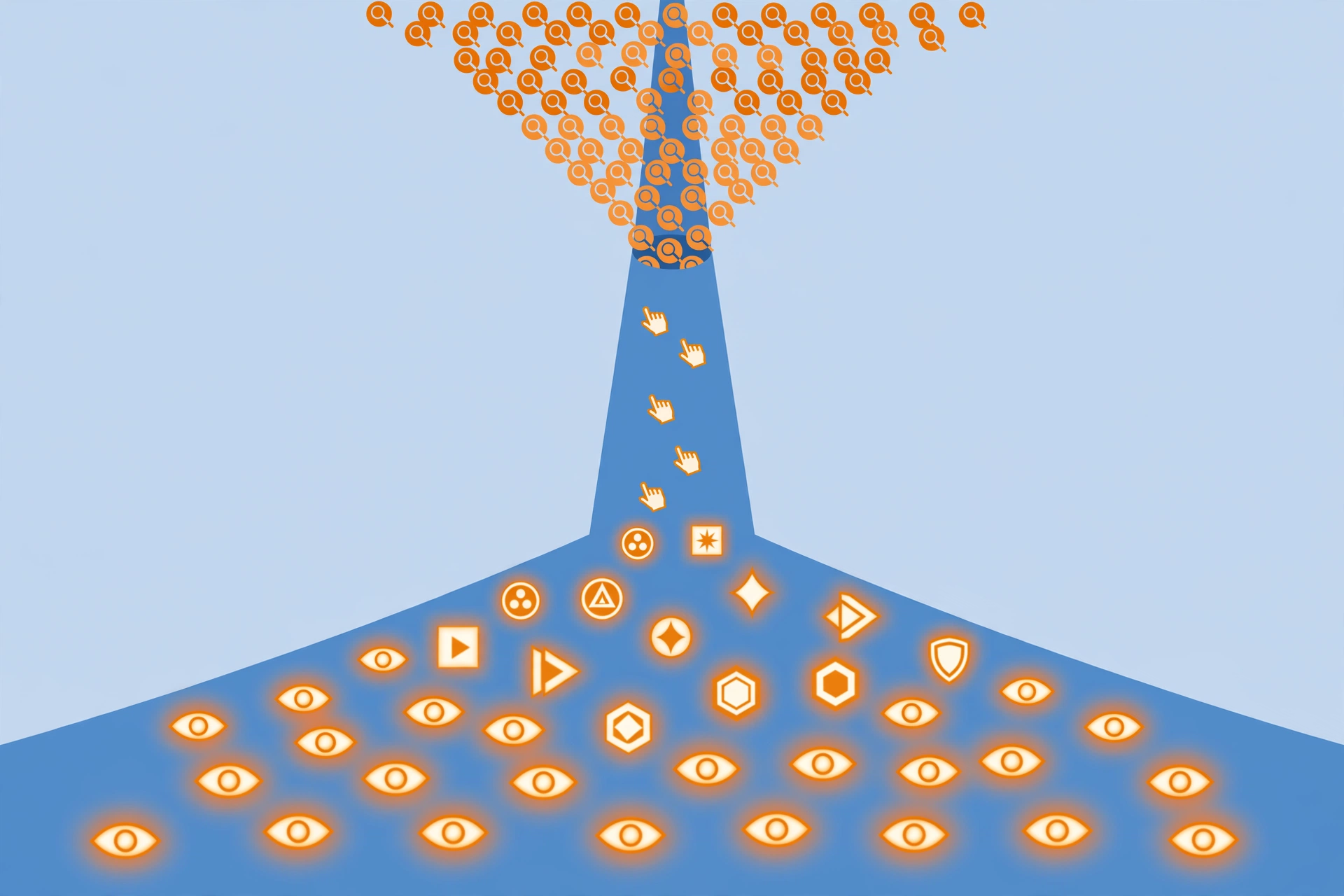
Your zero click search strategy should start by segmenting your own Search Console data: which queries lost clicks while gaining impressions? Those are your zero-click battlegrounds. Everything else is noise.
Why Your Zero Click Search Strategy Can’t Just Be “Rank Higher”
The old instinct — “we’ll just rank #1 and the clicks will come” — breaks down in a zero-click SERP. When an AI Overview answers the question above the fold, the #1 organic listing sits below it.
Studies of AI Overview SERPs consistently show depressed click-through rates for the traditional listings underneath. Ranking still matters enormously — AI Overviews disproportionately cite pages that already rank well.
So rankings are the ticket to the citation game. But ranking is now necessary rather than sufficient. A complete zero click search strategy optimizes for the whole SERP surface, not just the blue links:
- Win the featured snippet and PAA boxes for your question set.
- Get cited inside AI Overviews (see our AI Overviews ranking playbook for the exact structure).
- Own your knowledge panel and entity presence.
- Make your brand the memorable name inside answers people read but don’t click.
The goal shifts from “earn the click” to “become the answer.” When you become the answer, the clicks that do happen convert better — because the searcher already trusts the source.
The 6 Pillars of a Winning Zero Click Search Strategy
1. Map every question, not just every keyword
Traditional keyword research targets the words people type. Zero-click optimization targets the intent behind those words. For each priority topic, map 30–50 real questions using Google’s People Also Ask, autocomplete, and the questions AI chatbots answer in your niche.
These questions are the content brief for your zero click search strategy — each one is a potential PAA win, snippet win, or AI citation.
2. Write answer-first, every time
The single highest-leverage format change: put a direct 40–60 word answer immediately under each question-style heading, then elaborate below.
This gives Google a clean extraction point for snippets and PAA boxes while keeping enough depth to earn the click from users who want more. Question as H2, direct answer as the first paragraph, supporting detail after — no filler intros. This discipline is the foundation of a strong zero click search strategy.
3. Structure for extraction
AI systems and snippet algorithms both prefer content that’s easy to lift. Use ordered lists for processes, tables for comparisons, and short declarative paragraphs for definitions.
Add schema markup (FAQ, HowTo, Article) that accurately reflects visible content — Google’s structured data documentation is the authoritative reference for what’s supported. Structured data doesn’t guarantee selection, but it removes friction from your zero click search strategy.
4. Build entity authority
Knowledge panels and AI answers both run on entities, not keywords. Keep your business name, description, and category identical across your site, Google Business Profile, LinkedIn, and directories.
Publish original data and expert quotes that third parties reference — corroboration across sources is what makes an AI system confident enough to cite you, a key input to any zero click search strategy.
5. Diversify beyond the blue links
With organic clicks under pressure, the channels that capture demand directly matter more: email lists, YouTube, podcasts, industry communities, and direct brand search.
A searcher who reads your cited answer today and searches your brand name tomorrow is a zero-click win that still converts. Track branded search lift as a core KPI of your zero click search strategy.
6. Target the queries that still click
Not every query is zero-click. Commercial investigation content — comparisons, pricing breakdowns, in-depth reviews, implementation guides — still earns clicks because buyers need depth AI summaries can’t provide.
Audit which of your pages still convert clicks and double down there, while using answer-first formats to harvest visibility from the informational queries around them in your zero click search strategy.
New Metrics: How to Measure a Zero Click Search Strategy
If you measure a zero-click world with click-era metrics, every report looks like failure. Add these exposure metrics to your dashboard:
- Impressions vs. clicks gap: in Search Console, queries with rising impressions and falling CTR are your zero-click exposure. Track whether your pages appear in the features causing it.
- SERP feature ownership: what share of your target queries show your content in snippets, PAA, or AI Overviews? Tools that track SERP features make this visible.
- Share of voice in AI answers: how often your brand is cited across ChatGPT, Perplexity, Gemini, and AI Overviews for your question set. (Our guide to tracking AI search visibility covers the method.)
Then add the demand metrics that prove the exposure is working:
- Branded search lift: unclicked exposure should show up as more people searching your brand name directly. If it doesn’t, your answers aren’t memorable enough.
- Assisted conversions: use multi-touch attribution to credit the informational content that started journeys ending in direct or branded conversions.
Keep reporting these alongside classic metrics. The story to tell stakeholders: we’re trading low-intent clicks for high-visibility authority, and the branded demand line proves your zero click search strategy is working.
One more tip: benchmark against competitors, not just against your own history. If rivals own the snippets and AI citations for your shared question set, every month you wait is a month their brand becomes the default answer in your category — which is why your zero click search strategy can’t wait.
Your First 30 Days: A Zero Click Search Strategy Quick-Start
Theory is nice; here’s the week-by-week rollout for a working zero click search strategy:
Week 1 — Diagnose. Pull Search Console data for the last 3 months. Flag every query with rising impressions and falling CTR — that’s your zero-click exposure list.
Separately, list the queries where AI Overviews or featured snippets appear. The overlap is your priority battleground. Don’t guess; the data tells you exactly where clicks are being absorbed on-page.
Export the list and tag each query by intent — navigational, informational, or commercial. Informational queries with high impressions are your primary restructuring targets; commercial ones usually still earn clicks and need less intervention.
Week 2 — Restructure. Take your top 10 exposed pages and rewrite them answer-first: a direct 40–60 word answer under each question heading, lists and tables where they fit, no throat-clearing intros.
Add or fix schema markup to match the visible content. This single pass typically recovers snippet and PAA placements within weeks.
Week 3 — Expand coverage. For each priority topic, write the missing question-cluster content: the follow-up questions from People Also Ask that you don’t currently answer anywhere.
Each new page follows the same answer-first template. You’re building a net that catches the long tail of question queries, not just the head terms.
Week 4 — Measure the new way. Build the zero-click dashboard: impressions-vs-clicks gap per query cluster, SERP feature ownership, brand mention frequency in AI answers, and branded search trend.
Present it alongside classic metrics with one clear narrative — we’re converting invisible exposure into visible demand. That framing is what keeps stakeholder buy-in while the compounding kicks in.
After day 30, the work becomes a rhythm: monthly question-set refreshes, quarterly entity and schema audits, and continuous tracking of which AI surfaces cite you.
A zero click search strategy isn’t a campaign with an end date — it’s the new operating system for organic visibility.
Frequently Asked Questions
What is a zero-click search?
A zero-click search is a Google search that ends without the user clicking any result — the answer appears directly on the results page via AI Overviews, featured snippets, knowledge panels, or People Also Ask boxes.
Roughly 60% of searches end this way, a share that has grown as Google adds more on-page answers.
Does zero-click search hurt SEO?
It hurts click volume for informational queries, but it doesn’t make SEO pointless. Pages that rank well are disproportionately the ones AI Overviews cite, so rankings remain the entry ticket.
What changes is the goal: a smart zero click search strategy optimizes for visibility inside SERP features and AI answers, not just blue-link clicks.
How do you optimize for zero-click searches?
Write answer-first content with direct 40–60 word answers under question headings, use lists and tables that are easy to extract, add accurate schema markup, build entity authority through consistent brand information, and target PAA boxes and featured snippets deliberately.
Then measure impressions, feature ownership, and branded search lift — not just clicks.
What is the difference between zero-click searches and AI Overviews?
Zero-click is the broader phenomenon — any search ending without a click, including snippets, knowledge panels, and direct answers that predate AI.
AI Overviews are Google’s generative summaries and currently the fastest-growing driver of zero-click behavior, especially for informational queries. Your strategy must cover both the old features and the new AI surfaces.
Can you still get traffic from zero-click SERPs?
Yes — selectively. Commercial investigation queries (comparisons, pricing, reviews) still earn clicks because buyers want depth.
And unclicked exposure drives branded searches later: someone who reads your cited answer today may search your brand name tomorrow. Track branded search lift and assisted conversions to capture this delayed value.
Should small businesses worry about zero-click searches?
Less than publishers do, more than they think. Local businesses often “win” zero-click searches when users call or get directions straight from the business profile — that’s a conversion.
The real risk is informational content that used to drive discovery traffic. Audit your Search Console for the impressions-up-clicks-down pattern and apply answer-first formats to those pages first.
Watching impressions climb while traffic flatlines? That’s the zero-click gap — and it’s fixable. SSA Agency builds a zero click search strategy that turns unclicked searches into cited answers, branded demand, and pipeline.
Get a free SERP visibility audit and we’ll show you exactly which queries you’re losing to on-page answers — and how to win them back.